
How Fined works
Fined turns your group's unwritten rules into a game with a proper process — and a verdict nobody can quietly forget.
Step 1
Nominate
Spot a late arrival, an air shot or a shocking excuse? Open your court, pick the culprit, write the charge and propose the fine or forfeit. Courts can set a default fine so nobody argues about the amount.
Step 2
Second
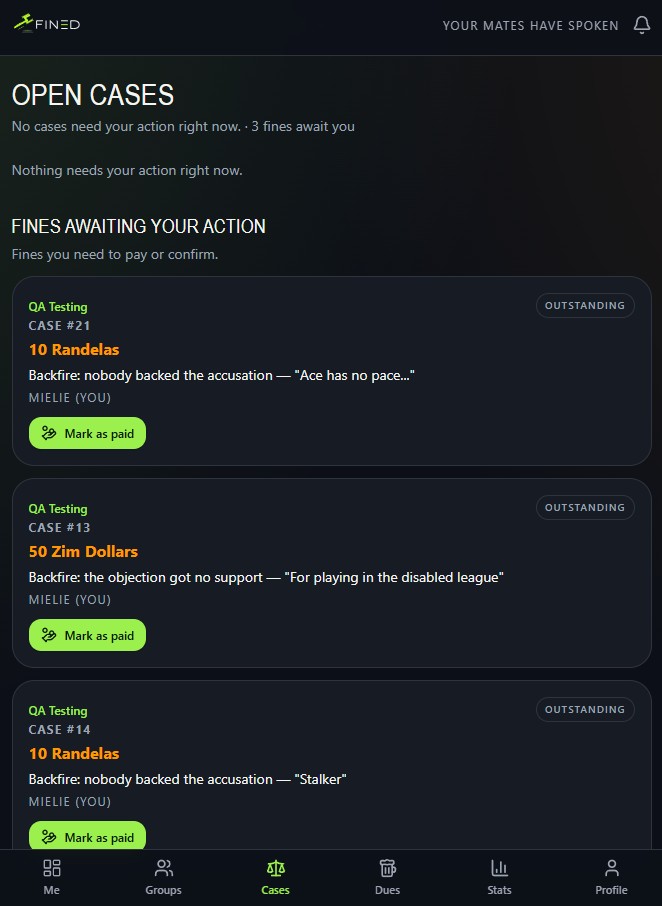
A nomination is only real once another member backs it. Each court decides how many seconds are required. If nobody supports you before the timer runs out, the fine backfires onto you.
Step 3
Object
The accused can lodge an objection with their defence while the case is still waiting for a second. Objections need backing too. A supported objection voids the fine and backfires it onto the objector's accuser.
Step 4
Decide
Once a nomination is seconded, the verdict is locked in and the fine is recorded against the guilty party. Nothing is edited afterwards, so the court record stays honest.
Step 5
Complete your dues
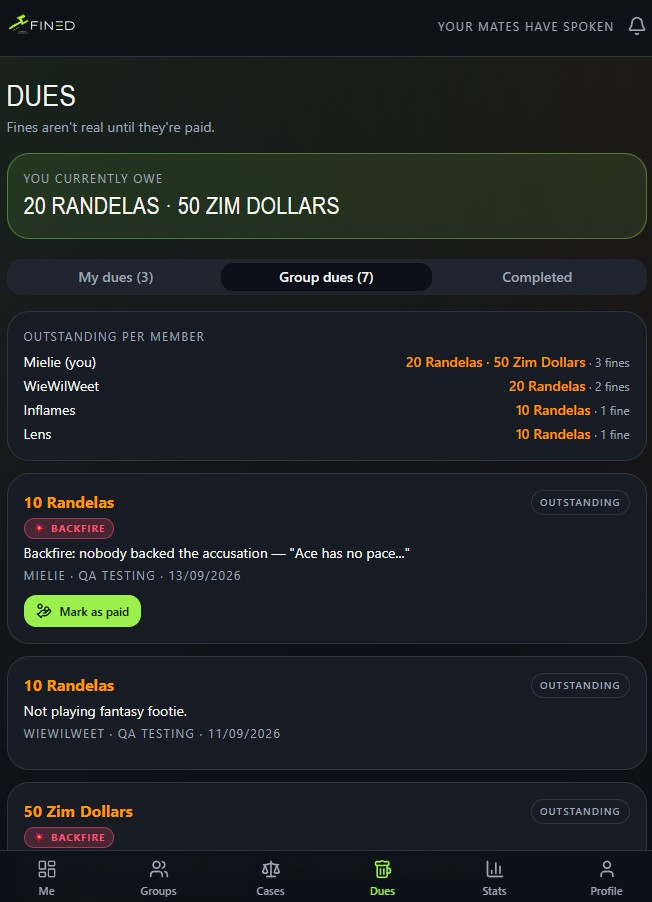
Fines can be money, beers, push-ups or anything your group agrees on. Mark a fine as paid and another member confirms it, so everyone sees a running tab they can trust.
Step 6
Build your reputation
Courts can switch on recognition levels, awarding titles and badges as members rack up fines. Leaderboards and stats keep the rivalry alive all season.
What happens when a nomination fails?
It backfires. If nobody seconds your nomination, or an objection is supported, the fine is recorded against the person who raised it instead. Backfired fines don't need seconding and can't be objected to.